
Our clients had owned their beautiful Somersby acreage for many years, creating a life there centred around their horses and love of the land. With established paddocks and a sand arena already forming part of the property, their vision was for a home that would feel equally connected to the setting and the way they lived.
Their initial design journey, however, had not felt quite right. After beginning the process with an architect, they found themselves feeling overwhelmed and unable to connect with the direction the project was taking. The plans were placed on the back burner while they reconsidered their options.
A project home was also explored, but a standardised design did not provide the flexibility they needed. Their property, lifestyle and priorities called for something far more individual.
It was after meeting Craig Riddle and Living Green Designer Homes that the project began moving forward again.
A design that began by hand
Somersby holds a particularly meaningful place in the LGDH story. It was the final home Craig designed as part of an LGDH design-and-construct project before his retirement.
Craig began with a hand-drawn concept that responded to the clients’ lifestyle, their preference for a single-level home and the particular conditions of the property. Ryan Cribb Drafting then developed that initial vision into the detailed plans required to bring it to life.
What is especially rewarding is how closely the home, as it now stands, has remained to Craig’s original sketch.
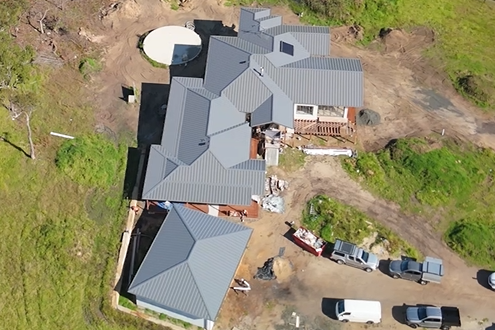
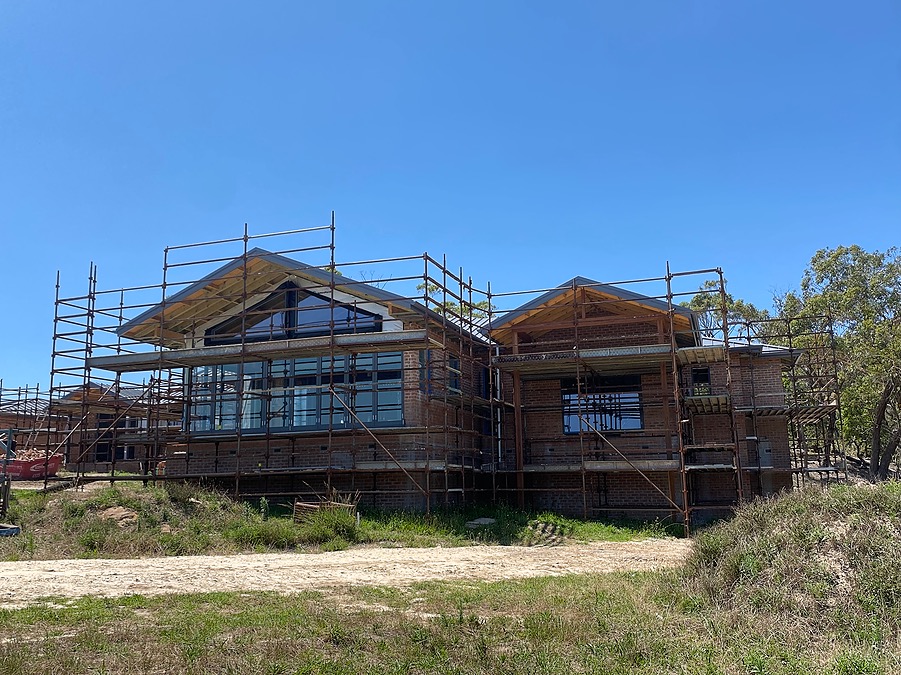
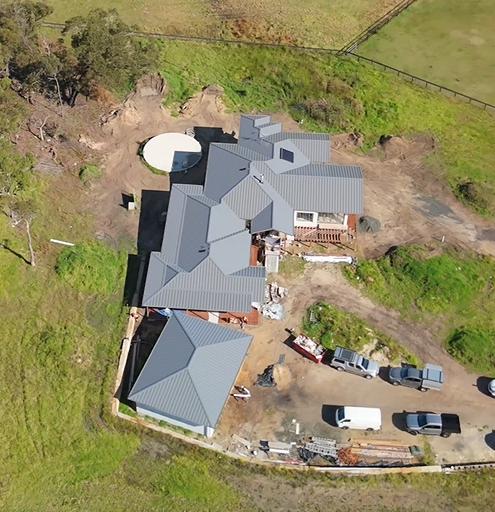
The result is a sprawling, single-level acreage home that feels entirely at home in its rural setting. Although the land slopes, maintaining the home on one level was important to the owners. Its long, grounded form reflects the character of a traditional acreage residence while allowing the internal spaces to flow naturally from one to the next.
Designing for the land and climate
A home can look beautiful on paper, but it also needs to respond to the realities of its setting.
The property is exposed to very strong westerly winds, so one of the key design challenges was creating outdoor living areas that could be used comfortably throughout the year.
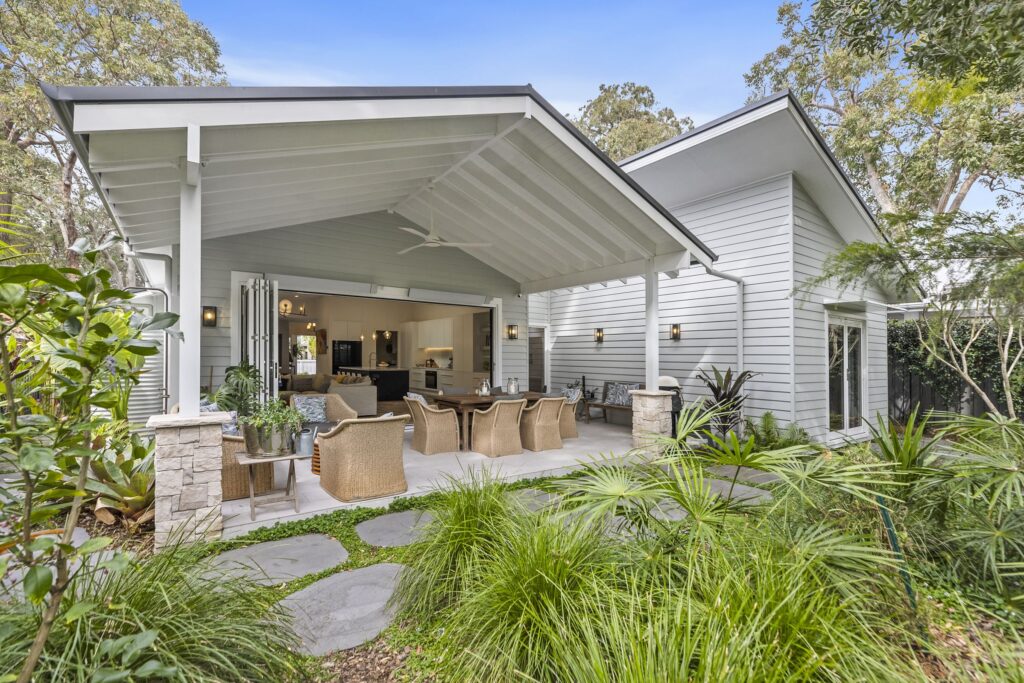
The alfresco was designed as a flexible extension of the main living area. Large bifold doors allow it to be completely enclosed and protected when the winds are particularly strong. In calmer weather, the doors can be opened to create an expansive indoor–outdoor entertaining space connecting the kitchen, dining room and alfresco.
A blackbutt-lined cathedral ceiling brings warmth and character to the space, while an integrated Infresco barbecue, designed for use in enclosed areas, makes the alfresco genuinely functional in a wide range of conditions.
This adaptability was central to the design. Rather than creating an outdoor area that could only be enjoyed in ideal weather, the alfresco became a space the owners could use throughout the year.
Comfort and performance in an off-grid home
Because the home is entirely off grid, energy efficiency was important not only for comfort, but also to minimise the demand placed on the property’s solar and battery system.
Somersby can become very cold during winter, particularly overnight. The house was therefore designed with several complementary measures to help retain warmth and reduce reliance on electric heating.
The home sits on a timber subfloor enclosed by brick, allowing the single-level design to sit appropriately across the sloping site. The subfloor has been insulated and lined underneath with fibre cement sheets, helping to protect the insulation and improve the thermal performance of the floor system.
The windows and doors also play an important role. The home features Vantage Aluminium ComfortEDGE windows and doors with Viridian LightBridge double glazing, supplied by AVS Windows & Doors.
The ComfortEDGE system uses an internal reveal that extends across the aluminium frame, helping to reduce heat transfer while creating a clean, seamless internal finish. The windows and external doors have also been square-set rather than finished with conventional architraves, allowing them to sit quietly within the walls.
At the centre of the main living area is a slow-combustion wood-burning fireplace. It creates a natural gathering point within the home while providing an efficient source of warmth through winter, particularly during the cooler months when less solar energy may be available.
Together, these decisions support a more comfortable home while reducing unnecessary pressure on the off-grid energy system.
A home designed for entertaining
The kitchen was created not only as a place for cooking, but as the social centre of the home.
Its oversized island, finished in Arielle Quartzite, provides a generous gathering point for family and guests. The clients wanted the person preparing food to remain part of the conversation while entertaining, so the cooktop was positioned within the island rather than against a rear wall.
To preserve the openness of the kitchen and avoid interrupting the sightlines with an overhead rangehood, the cooktop has been paired with a pop-up downdraft rangehood. When it is not in use, the rangehood retracts flush into the benchtop, allowing the quartzite and the scale of the island to remain the focus.
The adjoining butler’s pantry provides additional preparation and storage space, as well as a dedicated bar area and wine fridge.
The relationship between the kitchen, dining room and alfresco allows the entertaining spaces to work together as one generous zone. When the bifold doors are open, the main living area extends naturally onto the deck. When they are closed, the alfresco remains protected and connected to the rest of the home.
Seamless detailing and natural materials
One of the defining qualities of the Somersby home is the simplicity of its finished lines.
Square-set ceilings have been used throughout, along with square-set internal doors, external doors and windows. The doors have been recessed into the floor structure to achieve a flush finish, reinforcing the clean, uninterrupted lines of the interiors. Recessed flush skirting allows the wall surfaces to remain uncluttered, while solid blackbutt flooring brings natural warmth to the spaces.
These details may appear simple once complete, but they require careful planning and accurate set-out much earlier in the build. Wall framing, plasterboard, door jambs, glazing, flooring, cabinetry and skirting all need to be precisely coordinated.
Small inconsistencies that could otherwise be concealed by conventional architraves or projecting skirting remain visible when the detailing is this restrained.
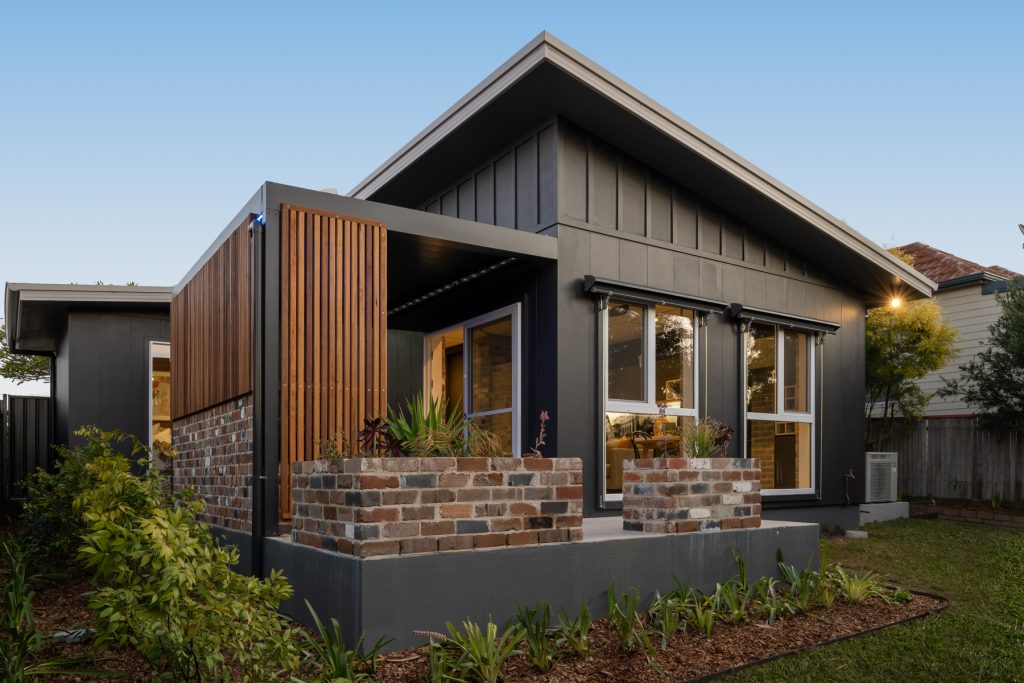
Externally, wraparound spotted gum decks reinforce the long, horizontal form of the home. Recycled spotted gum posts and beams add texture, scale and character, helping the new building feel grounded within its established acreage surroundings.
The blackbutt floors, timber-lined alfresco and recycled external timbers create continuity between the interior and the landscape, while refined stone, cabinetry and square-set detailing keep the overall result contemporary.
A home that is unmistakably theirs
The clients have been closely involved in selecting the finishes throughout the home, with guidance from Jendar Interiors.
While the design responds to the land and climate, it is the personal choices within the home that make it distinctly theirs. The stone, timber, fixtures, cabinetry and finer details reflect their personalities, the way they entertain and the atmosphere they wanted to create.
After spending so many years on the property, it was important that their new home did not feel imposed upon the landscape or disconnected from the life they had already built there.
It needed to feel as though it belonged.
As the final stages continue to come together, that is perhaps the most rewarding part of the project. What began as a hand-drawn concept has become a highly individual home shaped around its owners, its setting and the realities of comfortable off-grid living.
Planning a custom home on the Central Coast?
Living Green Designer Homes now focuses on building a limited number of custom homes and substantial renovations across the Central Coast each year.
While we no longer operate as a traditional design-and-construct business, we regularly collaborate with a range of trusted building designers and can work alongside your chosen designer or architect to bring your project to life.
This flexible approach allows us to remain closely involved throughout design and construction, with a focus on thoughtful planning, clear communication and a high level of finish.
If you are considering a custom home, acreage residence or substantial renovation, we welcome the opportunity to learn more about your plans.