
What Does It Really Cost to Build a Custom Home on the Central Coast in 2026?
If you’re planning a custom home on the Central Coast, one of the first questions you’re likely asking is:
“What is it actually going to cost per square metre?”
If you’re researching the cost to build a custom home Central Coast homeowners can expect in 2026, understanding realistic square metre rates is essential.
As custom builders working across the Central Coast, we are seeing realistic completed build costs in 2026 fall within the ranges outlined below.
For a well-built, custom home, you should realistically allow:
From $4,000 per m² for a quality custom home
$5,000–$8,000 per m² for architect-designed homes with elevated finishes
$8,000+ per m² for high-end, premium specification builds
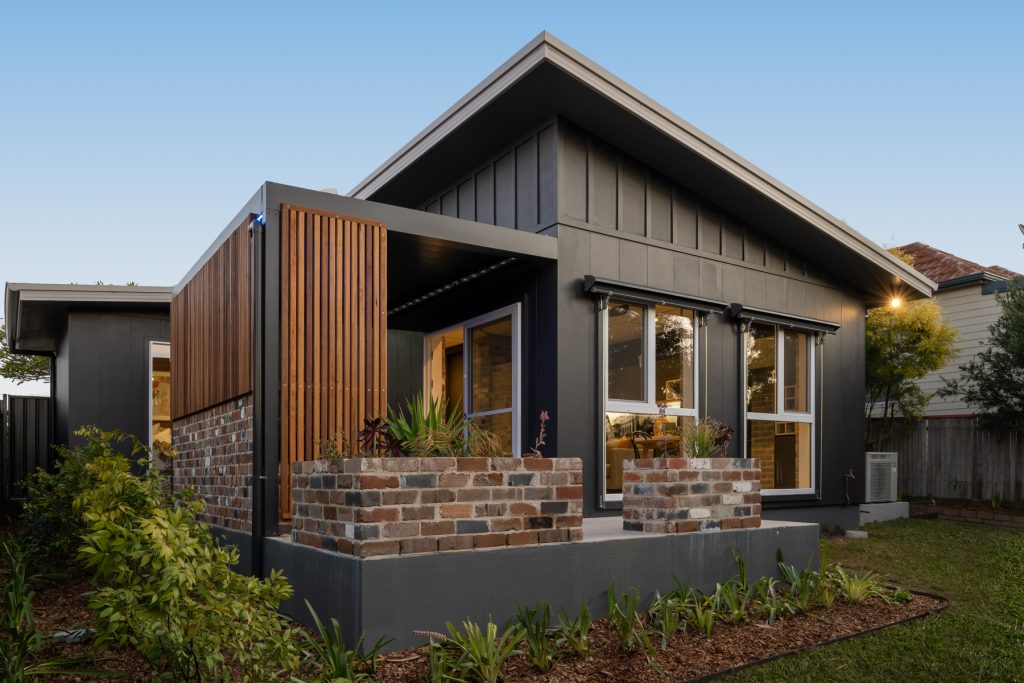
These figures reflect current construction costs on the Central Coast and the level of detailing, materials and coordination required for true custom projects.
Importantly, these rates reflect the cost of delivering a completed home — not an artificially low starting point that escalates through variations.
But square metre rates don’t tell the whole story.
Why $4,000/m² Is a Realistic Starting Point
A custom home is not a volume-built project home.
It typically includes:
- Site-specific engineering
- Higher structural requirements
- Custom joinery
- Upgraded window systems
- Detailed finishes
- More complex rooflines and forms
- Higher insulation and improved thermal performance
- Increased time on site
At around $4,000 per m², you’re building a thoughtfully constructed home with quality materials and professional coordination.
For many families, that represents a significant financial commitment — and it deserves to be treated that way. A custom home is a long-term investment in how you live, not just what you build. At this level, clients should expect careful planning, thoughtful decision-making and genuine attention throughout the process.
Economies of Scale: Size Matters
Square metre rates aren’t fixed.
Generally:
Larger homes can reduce the rate slightly due to economies of scale (wet areas, kitchens and services aren’t doubling proportionally).
Smaller homes can increase the rate per m² because kitchens, bathrooms and services make up a larger proportion of the build.
A 180m² home may cost more per m² than a 350m² home — even if the overall build cost is lower.
That’s why focusing purely on “cost per metre” can be misleading.
What Pushes Costs Toward $5,000–$8,000 per m²?
Architect-designed homes often include:
- Large spans and structural steel
- Double glazing and upgraded window systems
- High ceilings and complex detailing
- Custom joinery throughout
- Feature staircases
- Premium cladding systems
These elements improve comfort, longevity and aesthetics — but they also require additional time, materials and coordination.
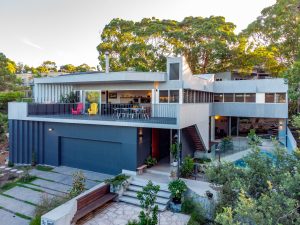
You can see examples of this level of detailing in our Second Point House architect designed build, where performance, architectural intent and finish were all key priorities.
Luxury Homes: $8,000+ per m²
Once you move into fully premium specifications, costs can exceed $8,000 per m².
This typically includes:
- Extensive glazing packages
- High-end natural stone throughout
- Bespoke joinery in multiple areas
- Commercial-grade appliances
- Luxury bathrooms
- Detailed external works and landscaping
- Pools and integrated outdoor living zones
At this level, the finish and complexity significantly increase build time, detailing and project management requirements.
Site Factors That Influence the Cost to Build on the Central Coast
On the Central Coast, additional costs often come from:
- Sloping blocks
- Bushfire requirements (BAL ratings)
- Coastal corrosion protection
- Retaining walls
- Driveway access challenges
- Stormwater management
These factors sit outside your internal finishes — but can have a major impact on overall budget.
A Note on “Too Good to Be True” Rates
It’s important to understand that the square metre figures above reflect realistic costs for a completed home — not introductory rates designed to secure a contract and then increase through variations.
One of the most common traps in residential construction is choosing a builder based on the lowest advertised rate, only to find that the final cost looks very different once construction is underway.
This can occur due to:
- Unrealistically low allowances
- Incomplete documentation at contract stage
- Items excluded or assumed
- Excessive variation charges during the build
The end result can be a final build cost that far exceeds the original figure.
A transparent, well-prepared estimate may appear higher at the outset — but it is far more likely to reflect the true cost of delivering the finished home.
When comparing pricing, it’s important to look beyond the headline rate and understand:
- What is actually included
- The quality level assumed
- The allowances provided
- The builder’s approach to managing changes
Clarity early on protects both budget and relationships.
Building Smart: Where to Splurge and Where to Save
A premium result doesn’t mean spending at the highest level in every category.
With thoughtful planning, you can achieve a refined, beautiful and timeless home without overcapitalising.
We often guide clients to:
✔ Invest in structural integrity and the building envelope
✔ Upgrade windows and insulation
✔ Focus on kitchens and main living areas
✔ Select feature materials strategically
✔ Simplify roof forms where possible
✔ Balance stone selections across spaces
✔ Avoid overcomplicating secondary areas
✔ Simplify certain elements to reduce complex engineering requirements (such as overly large structural spans)
Smart decisions early in design have a far greater impact on cost than late-stage finish selections.
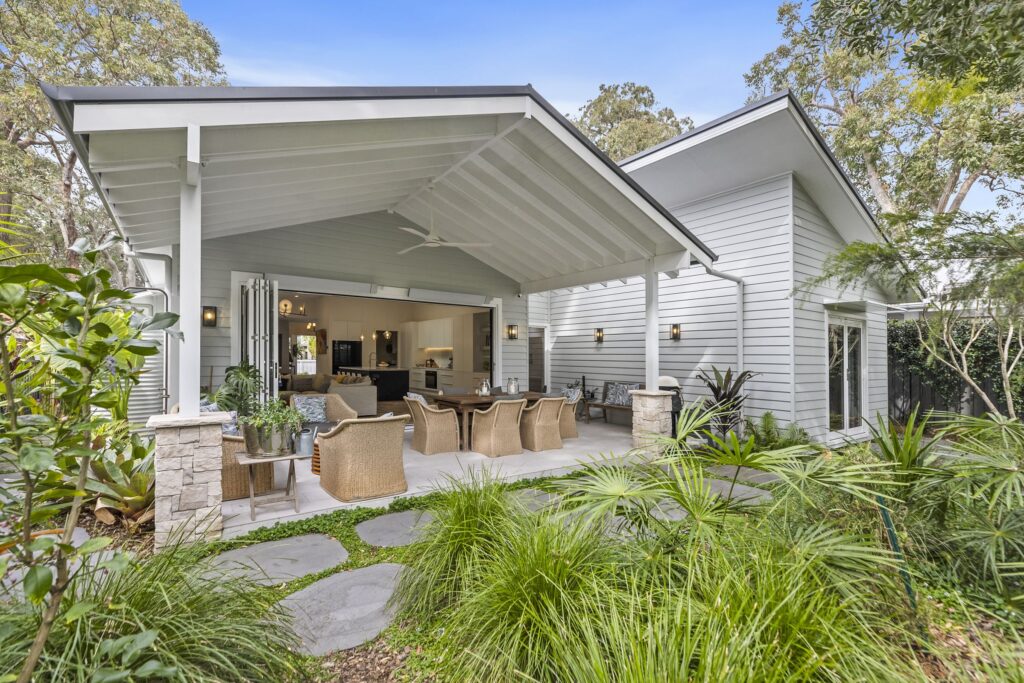
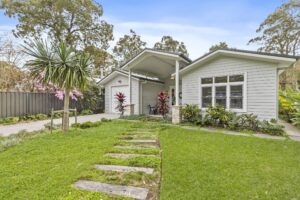
Many of these principles were applied in our Pearl Beach coastal rebuild, where performance, material longevity and considered design were carefully balanced to achieve a refined, enduring coastal result without overcapitalising.
Ultimately, It Comes Down to the Team
The biggest cost mistakes rarely come from finishes.
They usually stem from:
- Poor documentation or incomplete design
- Late design changes
- Unrealistic allowances
- Lack of coordination
- Inexperienced site management
Having the right team around you — architect, engineer and builder — allows you to:
- Understand real costs early
- Make informed trade-offs
- Maintain transparency
- Avoid unpleasant surprises
- Protect long-term value
A well-managed project is almost always more cost-effective than a poorly coordinated one — even if the per metre rate appears higher on paper.
A Final Word on Budget Expectations
If you are planning a custom home on the Central Coast in 2026, a safe starting point is:
From $4,000 per m² for a quality custom home
$5,000–$8,000 per m² for architect-designed builds
$8,000+ per m² for high-end homes
Plus allowances for site works, driveways, landscaping and pools where applicable.
Planning early — and engaging the right team — makes all the difference.
Thinking About a 2026 or 2027 Project?
If you’re planning a project on the Central Coast in 2026 or beyond, we’re always happy to have an early, transparent conversation about feasibility and realistic budget expectations before you commit to detailed documentation.
A custom home at this level deserves careful planning, considered decision-making and genuine attention throughout the build. It’s a significant investment — and it should be treated with the respect and diligence it warrants.
Starting with clarity and the right team around you makes all the difference.
Frequently Asked Questions About the Cost to Build on the Central Coast
What is the average cost per square metre to build on the Central Coast in 2026?
For a completed custom home, realistic costs typically start from around $4,000 per m², with architect-designed homes ranging between $5,000–$8,000 per m² depending on specification and site conditions.
Why do some builders advertise lower rates?
Lower advertised rates may exclude key items, rely on minimal allowances or use provisional sums that increase during construction. It’s important to understand what is included before comparing pricing.
Do sloping blocks increase building costs?
Yes. Sloping sites often require additional excavation, retaining walls, structural engineering and drainage, which can significantly impact overall budget.
How can I avoid budget blowouts during construction?
Budget blowouts are often the result of incomplete documentation, unrealistic allowances or late design changes. Engaging an experienced builder early, ensuring detailed plans and maintaining open communication throughout the project significantly reduces the risk of unexpected cost increases.
What should I expect from a custom builder at this price point?
At this level of investment, you should expect careful planning, transparent communication and genuine attention to detail throughout the process. A custom home is a significant commitment, and it should be approached with professionalism, coordination and respect for both budget and outcome.